About / Anderson Tavares-Garcia
I start by
paying attention.
A gesture. Music coming from a passing car. A place that feels different when you return. These are the things that bring me to a story.
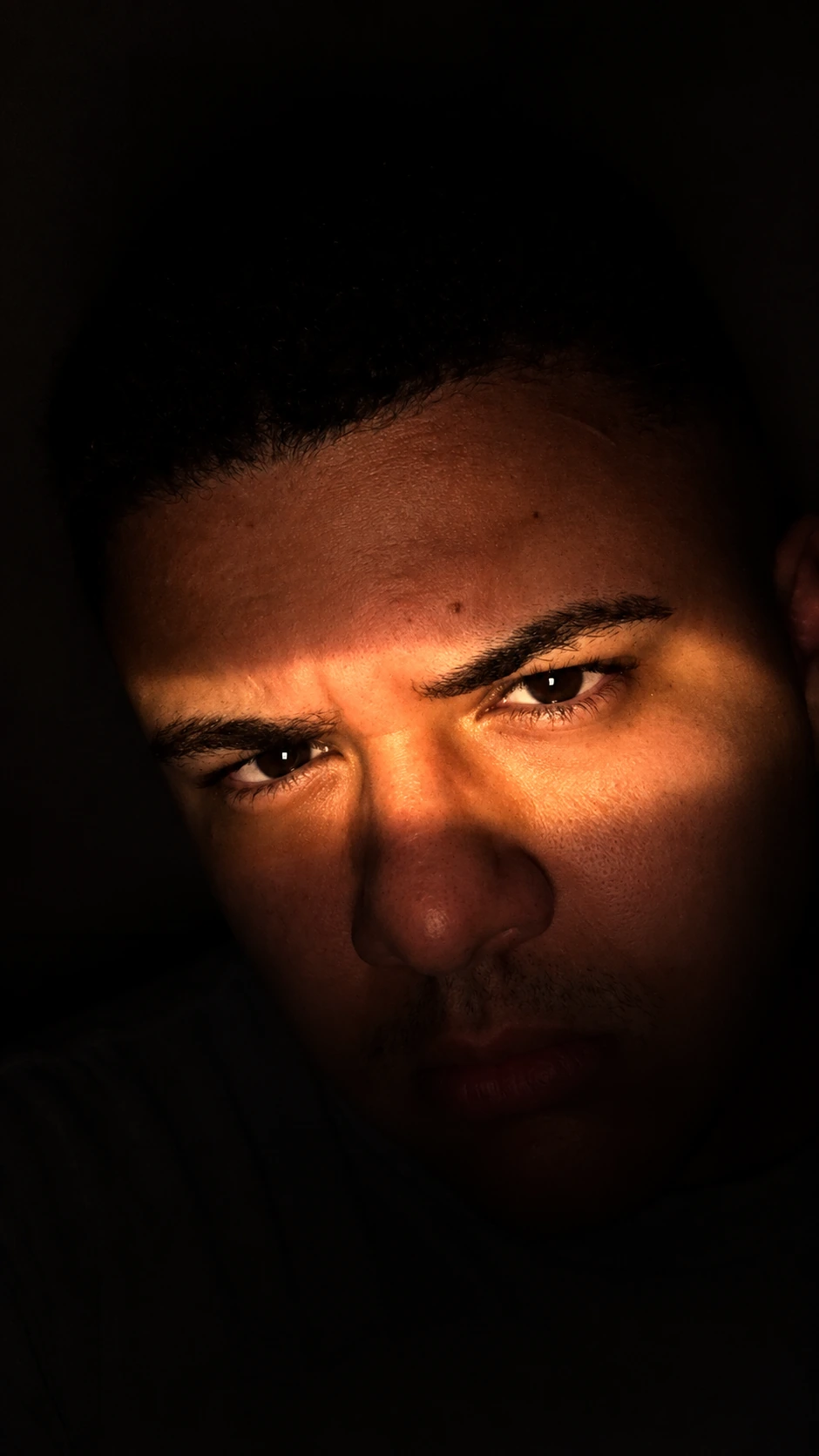
About me
Anderson, beyond the credits.
I’m Anderson Tavares-Garcia, an Afro-Latino writer, director, and photographer born in San Juan, Puerto Rico. I move between fiction, documentary, experimental film, and photography, choosing the form that gives each idea room to develop.
I’m drawn to the conversation between art and the world outside it. A film can lead me into a political question; a photograph can become the beginning of a fictional scene. I like following those connections and seeing where they take me. This portfolio brings those different parts of my creative life together.
My creative vision
Identity should not be
the price of belonging.
I write people whose grief, loyalties, and convictions make their choices difficult. I’m interested in the distance between understanding someone’s pain and excusing what they do with it.
My advocacy centers on the dignity of marginalized people and the preservation of cultural memory. Through fiction and photography, I want to make the pressures on those lives felt—and leave room for the audience to question what they see.
In my own words / 5 minutes
A personal introduction.
Trouble playing? Open in Google Drive
In more depthThe story behind the work.Origins, identity, practice, and the road ahead.
Before I had a camera.
My mother used to take my brother and me on walks through Condado. Along Ashford Avenue, music poured from cars and people carried their joy, anger, and grief into the street. Before I could fully understand English, I was learning to read emotions through gestures. A face told me something about a person; their surroundings gave me a story.
Weekend trips to Caribbean Cinemas gave that attention another direction. Two films in particular helped me understand what I wanted from storytelling: Tron: Legacy and Prisoners.
Tron: Legacy captivated me with its color, symmetry, and electronic sound. I’m interested in how those elements work together to make a world feel immersive—how the image and the music can carry an emotion before a character says anything.
Prisoners drew me toward suspense and morally complicated characters. The anger and dread stayed with me after the film ended. It made me want to understand how a story can bring us close to someone’s desperation while leaving us unsettled by their choices.
After a loss in my family, we moved to Galveston, Texas. During that period of isolation, school libraries brought me back to comics. Injustice: Gods Among Us drew me toward conflicting ideas of justice. Later, in rural Illinois, those questions became inseparable from my own life.
Learning who I could stop pretending to be.
I was born in Puerto Rico to Dominican parents, with Haitian and Portuguese ancestry. In Illinois, I was the only person of color in my class. Years of racism made belonging feel conditional. For a time, I adopted conservative and anti-immigration views from people around me and from political media online, even when those views contradicted my family’s experiences. I was trying to find acceptance by distancing myself from parts of who I was.
Essential X-Factor, Volume 1 challenged that. I recognized myself in Angel’s struggle with hiding his wings to fit into a world that rejected mutants. Reading about prejudice and identity made me question whose approval I was seeking and what it was costing me. The X-Men helped me see how fiction could expose something I had struggled to recognize in myself.
I began with fan fiction, then short stories and poems about identity and marginalization. Witnessing racist responses to George Floyd’s murder pushed me to confront hatred more honestly in my writing. I became interested in what happens when people fear what they don’t understand—and when everyone believes they are justified. Those questions still guide me.
Giving the images a language.
At Blackburn College, studying scene composition gave me words for the images I had been imagining. Working as a photographer in the college’s public relations department gave me a camera and a reason to learn by doing. Photography classes helped me develop that instinct. Soon I carried a camera because I felt compelled to look, whether or not I was working.
Electronic dance music is part of that way of seeing. Rhythm, light, shadows, shapes, and movement can make an ordinary environment feel like a scene. I often photograph places without people because I imagine the lives that could unfold there: someone resting on a staircase after a long shift, or returning to a street that holds a difficult memory. The environment becomes a way to communicate an inner life.
I earned my B.A. in Communications and Media Studies, studying philosophy, sociology, advertising, and media production alongside my visual work. My early films—The Mind Is Not Yours, The Blackburn Bees, and Consume & Destroy—let me begin exploring narrative, documentary, and experimental approaches. Photography continues to inform how I think about framing, atmosphere, and the emotional weight of a place.
What that belief asks of the work.
Returning to Puerto Rico after college made me look at home differently. I became more attentive to displacement, gentrification, colorism, xenophobia, and the pressure to exchange cultural identity for a promise of stability. Having once tried to make myself acceptable by borrowing beliefs that harmed me, I care deeply about the right to belong without surrendering who you are.
My advocacy centers on the dignity of marginalized people, the preservation of cultural memory, and resistance to the systems that narrow people’s choices. I want my work to make those pressures tangible through the lives of the people experiencing them. I write survivors whose grief, mistrust, desires, and mistakes lead them toward different responses to injustice. Understanding a character’s pain does not require excusing the harm they cause.
This is also why I document the ordinary. A building, an object, or a familiar street can carry a history that becomes visible only when it is threatened or gone. In projects such as How I Remember This Place, the contemporary image and my memory coexist. Documenting these places is a way of resisting disappearance.
Direction / The work ahead
Making the vision felt.
Alongside developing my films and photographic projects, I’m deepening my craft as a filmmaker: directing actors, moving the camera with intention, shaping an editing rhythm, and communicating a vision that collaborators can help develop. I’m pursuing MFA training for the sustained practice, mentorship, critique, and collaboration that this requires.
Stories helped me recognize how I had changed myself to survive. I want to make films that offer others that possibility of recognition: an encounter with another person’s experience that opens room for empathy, questions, and change. My aim is to make an audience feel the stakes and give them space to think for themselves.
Explore the work